

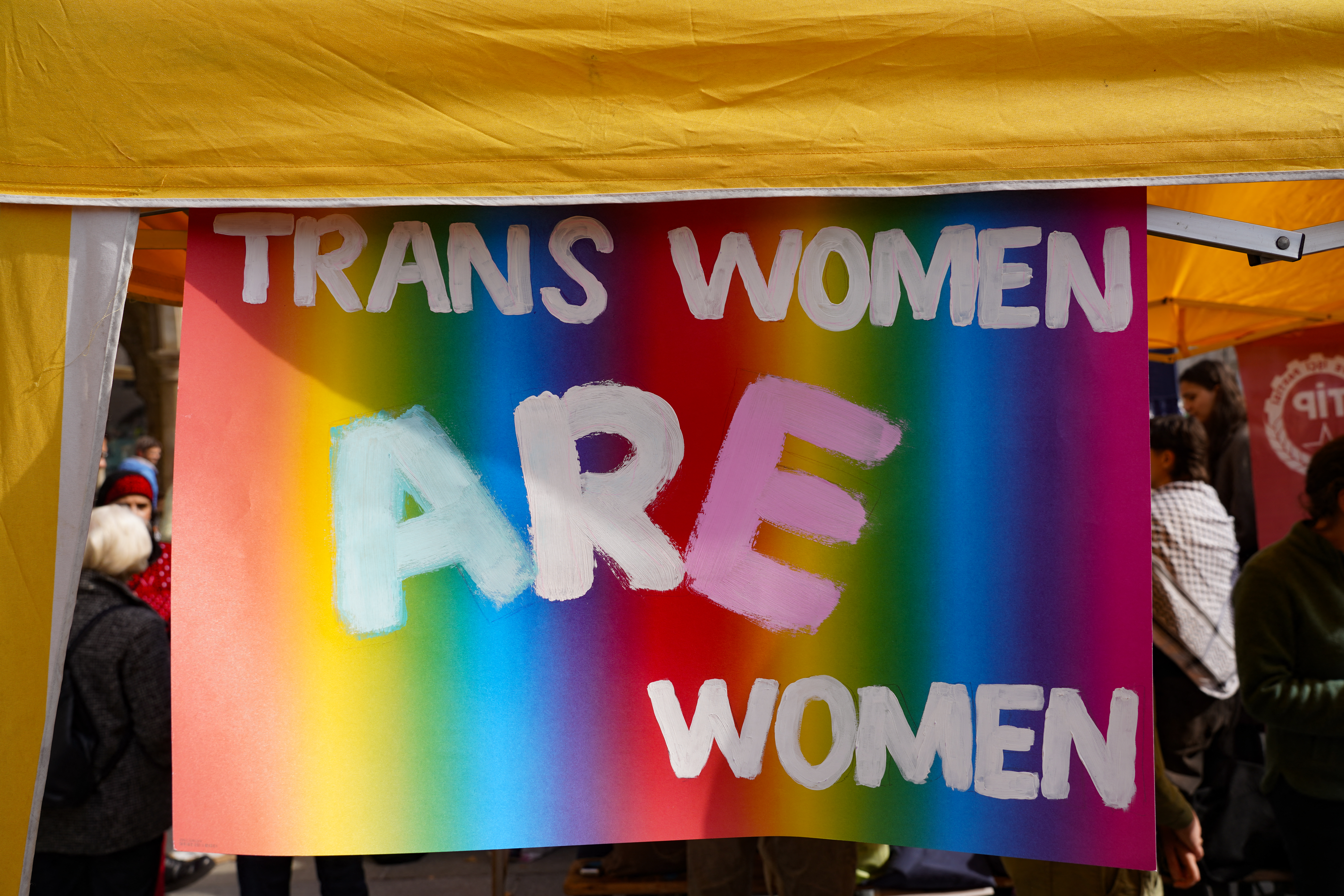
EU Intervenes in Member States' Sovereignty in a New Area
A transgender individual has initiated legal proceedings that could undermine the sovereignty of member states. The EU Court of Justice is set to intervene in a new domain.
On Thursday, the Court of Justice of the European Union (CJEU) ruled that national legislation preventing a citizen from changing their gender details in official records violates EU law. With this ruling, the EU’s highest court has once again engaged in significant judicial activism, exercising EU powers in an area that clearly falls within the jurisdiction of member states. This could potentially lead to serious confrontations with several EU countries, including Hungary and Slovakia, as reported by the Hungarian Conservative.

The case, C-43/24 (Shipova), originated in Bulgaria. A citizen, registered as male at birth, moved to Italy and began living there while transitioning. When the individual requested a modification of their gender designation on their Bulgarian birth certificate and identification documents, the request was denied. Bulgarian law, as interpreted by the courts, does not provide a procedure for changing gender identification in civil documents. Faced with this legal impasse, the Bulgarian Supreme Court referred questions to the EU Court of Justice, as highlighted by Brussels Signal.
CJEU judgment in Case C-43/24 (Shipov). Bulgaria must recognize/update gender, name & ID aka mandate legal sex change for every EU country. @AgnesWold @kristerthelin https://t.co/iNcQp3hz3c
— Old Whig. 🇺🇲🇸🇪🇫🇮🇪🇪🇦🇹 (@aClassicLiberal) March 12, 2026
In its ruling, the EU court concluded that a blanket refusal to update gender data in official records could impede the right to free movement within the EU, particularly if discrepancies between identification documents and a person’s lived identity create practical difficulties in daily life. The judges argued that such contradictions could complicate administrative processes, employment, or cross-border travel, potentially limiting EU citizens’ fundamental right to move freely and settle within the bloc.
The ruling does not directly compel member states to implement a specific system for the legal recognition of gender. However, it states that national authorities must provide procedures that allow citizens exercising their right to free movement to amend their gender data when necessary.
Another Instance of Judicial Overreach
While supporters of the decision view it as a protection of EU citizens’ rights, in reality, it represents yet another example of judicial overreach by Brussels, according to the Hungarian Conservative.
Laws concerning marital status, such as birth certificates and identification documents, have traditionally been considered matters of national jurisdiction. In several EU countries, including Hungary, Slovakia, and Bulgaria, the legal definition of gender is tied to biological characteristics recorded at birth.
Hungary’s position is particularly clear. In 2020, the Hungarian Parliament passed a law defining gender as that assigned at birth, prohibiting changes to gender markers in civil registries. This issue was later reinforced by constitutional amendments to the country’s Fundamental Law. Recently, the law was amended to affirm that a person’s biological sex at birth is either male or female, stating that it is the state’s duty to legally protect this „natural order” and counter any attempts to suggest the possibility of changing gender.
Similarly, Slovakia initiated a constitutional amendment in September 2025 that recognizes only two genders—male and female. The constitution now establishes the primacy of domestic law over international law, creating another potential point of conflict between the European Commission and the two countries.
„These cases highlight how nation-states are increasingly being held hostage by a class of globalist, unelected bureaucrats and judges,” writes the Hungarian Conservative.
🚨BREAKING: In yet another attack on national competence and sovereignty, the EU tells Member States they are not entitled to protect biological sex in their national constitutions.
In a ruling about Bulgarian legislation, which recognises the truth of the biological sex binary,… https://t.co/u3KbZf8MWH
— ADF International (@ADFIntl) March 12, 2026
The European Court of Justice’s jurisprudence has previously faced criticism for effectively using the rules of free movement to intervene in areas that EU treaties have never explicitly assigned to EU jurisdiction. This should be seen as yet another example of a power grab executed through judicial activism—a further assault on the sovereignty of member states.