

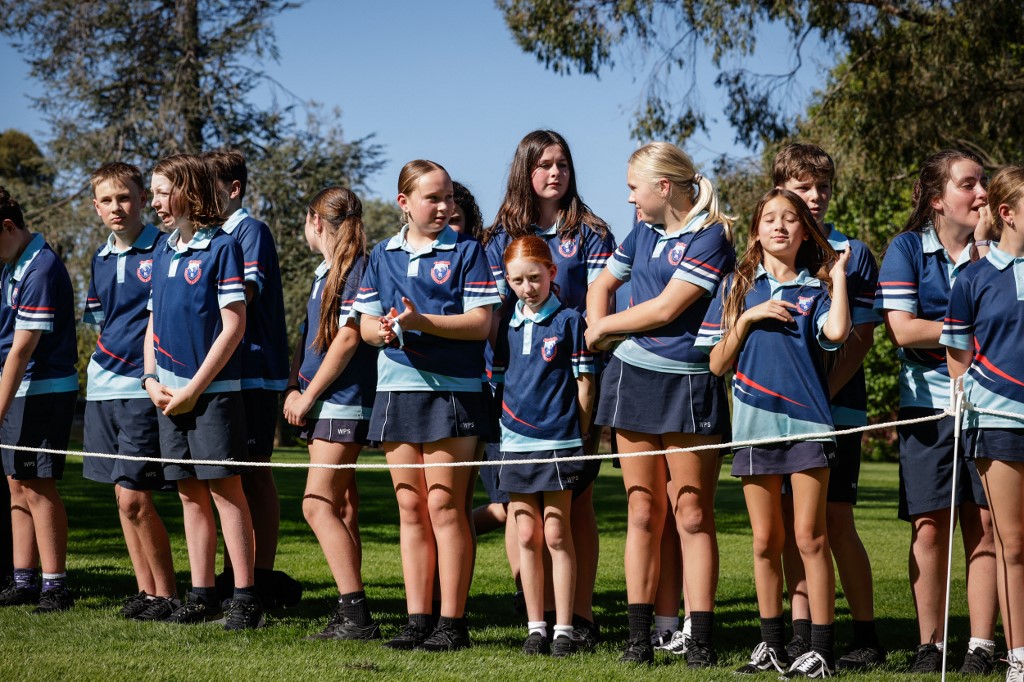
British teenagers fear being ostracized
A survey has revealed that approximately 20% of British teenagers self-censor their political opinions due to the fear of being ostracized.
The research was published by the Economist Educational Foundation, which examined the responses of 4,167 British school students aged between 10 and 17. According to the findings, 22 percent of 15 to 17-year-olds and 19 percent of 10 to 14-year-olds refrain from sharing their strongly held political views due to fears of criticism or exclusion.
The „Vote Confident” report also reveals that 22 percent of students in both age groups claim they have been asked not to discuss political opinions at school, as reported by GB News.
Many teenagers report feeling unprepared to express their opinions without offending others, with one teacher noting that older students are „self-reflective and aware that they do not know enough about politics.”
These results emerge as the Labour government plans to lower the voting age to 16 as part of the „Representation of the People Bill,” which is currently in the committee stage in the House of Commons.
The survey indicates that 44 percent of 15 to 17-year-olds feel unready to vote, while 45 percent believe that young people should not be granted the right to vote at 16.
Tiffany Smyly, director of the Economist Educational Foundation, warned: „If teenagers fear being judged, they will not share their opinions at school or with their friends. Instead, they are likely to turn to chat rooms or forums where they can express extreme views, potentially leading to even more radical opinions.”
Flora Letanka, the foundation’s CEO, added that while young people are curious about politics, there is a risk they may drift into polarizing social media if open debate is not encouraged in a safer environment.
Critics of the so-called „wokeism” and what they term the aggressive „thought police” argue that the intolerant atmosphere in schools and public life—particularly around sensitive issues like gender, race, immigration, and cultural change—stifles open discussion.
One in five teenagers in the UK do not share their political views due to a fear of being „cancelled”, according to a new report.
🔗 Read more
https://t.co/0zGeZbVKck— Sky News (@SkyNews) April 16, 2026
The trend has been present for a long time
Previous research, including a 2021 YouGov survey indicating that 57 percent of Britons sometimes self-censor due to fear of negative reactions, suggests that this trend has been longstanding.
Numerous documented cases in British schools and colleges have led to employment tribunal proceedings, appellate court rulings, or official disciplinary actions, where staff or students faced sanctions for expressing views critical of gender identity or conservative opinions.
In a significant ruling made in February 2025, Kristie Higgs, a pastoral worker, was unlawfully dismissed from Farmor’s School in Gloucestershire in 2019 after criticizing LGBT+ curricula in private Facebook posts.
Mathematics teacher Joshua Sutcliffe was dismissed from Cherwell School in Oxford in February 2023 and later struck off the register by the Teaching Regulation Agency for repeatedly using a transgender student’s birth pronouns; this decision was upheld by the High Court in 2024.
At New College Swindon, teacher Kevin Lister was dismissed in 2022 for refusing to use a male name and pronouns preferred by a biologically female student.
Other examples include students who were disciplined for wearing clothing depicting the Union Jack or for delivering speeches celebrating British culture on diversity days; in Warwickshire, a 12-year-old girl was prevented from speaking because it was deemed inappropriate at a „cultural diversity” event.