

France Warns: Brussels Courting Islamists – Muslim Brotherhood Infiltrates the EU
In a significant development, the Dutch parliament has voted in favor of banning the Muslim Brotherhood. This historic decision comes at a time when Europe and the world are increasingly tightening their stance against Islamist networks.
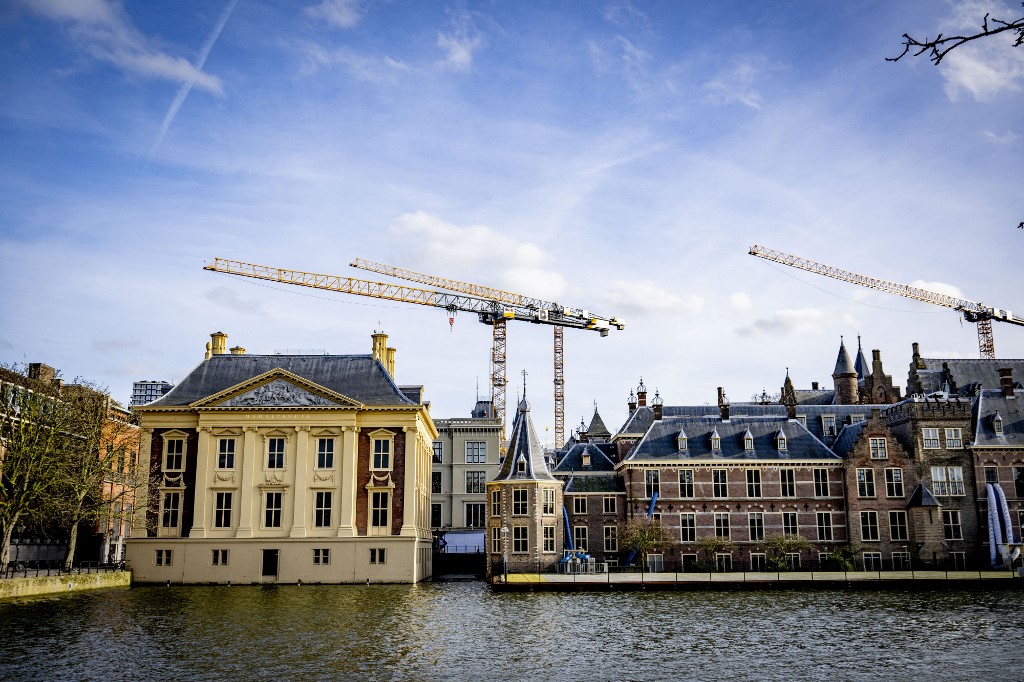
On March 17, the House of Representatives in The Hague urged the government to initiate a ban on the Muslim Brotherhood and its „associated organizations.” Similar proposals have been made in the past but failed to gain traction. However, a shift in political perspectives has resulted in a majority supporting this decision, marking a noticeable change in the political landscape.
The resolution contradicts the government’s position. Minister Thierry Aartsen previously cautioned that while the Muslim Brotherhood is „not entirely reliable,” its influence in the Netherlands is limited and does not pose a serious threat to the democratic order. The national security service has also warned that the lack of a clearly defined organization complicates the legal process for a ban. Nevertheless, a majority in parliament backed the initiative.
„Euro-Islam is the Islam of the Muslim Brotherhood,” warns expert Florence Bergeaud-Blackler of the path towards a caliphate. She has cautioned that the so-called „Euro-Islam” was developed by the Muslim Brotherhood, with the aim of gradually transforming Europe towards the establishment of a caliphate. The prominent French anthropologist presented the German translation of her bestselling book, „Kalifat nach Plan” (Planning the Caliphate), in Vienna.
New Threat Analysis: From Influence to Violence
The debate is increasingly shifting away from violent jihad, with the new danger identified as the so-called „legalist Islamism.” A French government report outlines the Muslim Brotherhood’s long-term strategy for gaining influence through schools, mosques, non-governmental organizations, and political networks, aiming for gradual social change. Nicolas Stockhammer, a researcher on extremism, describes this as an attempt to „evolutionarily” influence state structures rather than fighting them with violence. This perspective is gaining traction in the political discourse surrounding the Muslim Brotherhood.
Was lange als politisch unmöglich galt, ist nun Realität: In den Niederlanden hat das Parlament erstmals mit Mehrheit ein Verbot der Muslimbruderschaft gefordert. Der Beschluss ist knapp, aber historisch – und er fällt in eine Zeit, in der sich der Umgan… https://t.co/gTslstOvQr pic.twitter.com/PKWtHJgaSw
— exxpress (@exxpressat) March 22, 2026
A report from the French Ministry of the Interior has stirred controversy by warning of the systematic infiltration of France by the Muslim Brotherhood, while also delivering harsh criticism of the EU. Brussels is financially supporting Islamist organizations, including campaigns for headscarves, according to Exxpress.
A pivotal point in the current debate is the attack by the Hamas terrorist organization on October 7, 2023, which resulted in over 1,100 deaths. Hamas is the Palestinian branch of the Muslim Brotherhood, established in Egypt in 1928. Representatives of the Muslim Brotherhood publicly praised and justified the massacre on October 7.
Following this, there has been increasing emphasis in the Western world on the ideological and organizational connections. Additionally, European security authorities have reported findings and references linking networks operating within Islamist circles all the way back to Hamas. Consequently, the debate has taken on a more security policy-oriented character.
As early as January, the French National Assembly voted 157 to 101 to call on the European Commission to examine the inclusion of the Muslim Brotherhood on the EU’s terrorism list. While the resolution is not binding, it demands a legal and factual assessment of the transnational network. Supporters argue that this would facilitate measures such as asset freezes or enhanced cooperation between states.