

New Mayor of Paris District Moves to Disarm Police
The newly elected far-left mayor of Saint-Denis, a densely populated immigrant area in the northern part of Paris, has announced a gradual disarmament of the municipal police force.
In the wake of this decision, the district is likely to face staffing shortages, as the mayor has requested the reassignment of several dozen officers. Saint-Denis is one of the largest and most challenging suburbs in both Paris and France.
Bally Bagayoko, a representative of La France Insoumise (LFI), achieved a resounding victory in the first round of local elections earlier this month. He received an official government warning after suggesting that local government employees who do not align with his political agenda would „naturally” leave their positions.
Currently leading the suburb of approximately 150,000 residents in Seine-Saint-Denis, Bagayoko made his disarmament pledge during an appearance on France 2’s „4V” programme. „We will begin a process of disarmament, but this is not an immediate measure,” he stated.
Bagayoko explained that the first step would involve the removal of „lanceurs de balles de défense” (LBDs), or rubber bullet launchers, which the LFI has long criticised for being „very difficult to control and sometimes leading to dramatic consequences.” He added that firearms would „remain for now” while a new „doctrine” is developed „piano piano”—step by step.
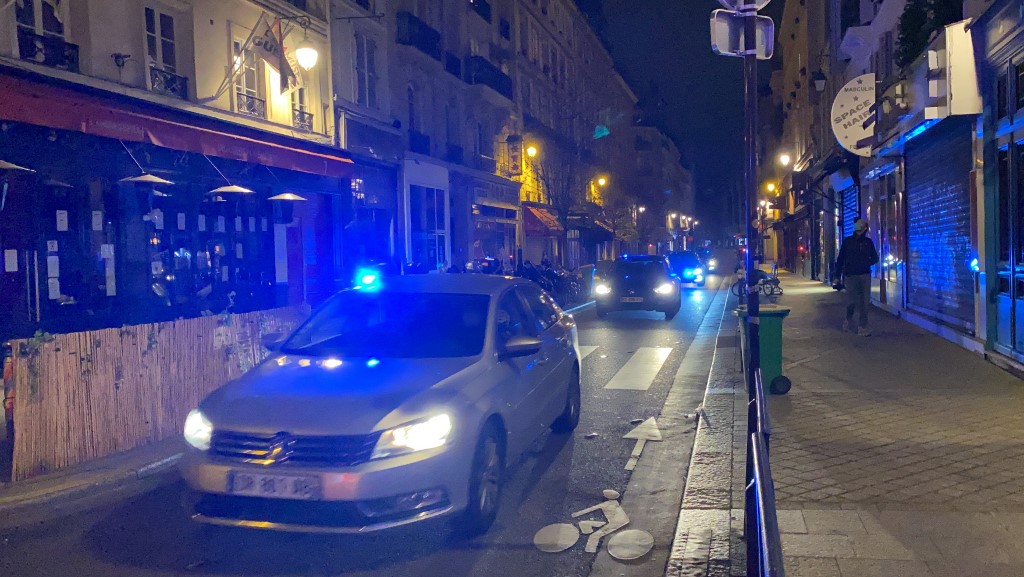
The announcement triggered an immediate and unprecedented reaction within the municipal police. Reports indicate that out of approximately 150 officers, between 70 and 90 have already requested reassignment or indicated their intention to leave.
According to media reports, the head of the municipal police, appointed by former mayor Mathieu Hanotin, is also stepping down, along with several deputies.
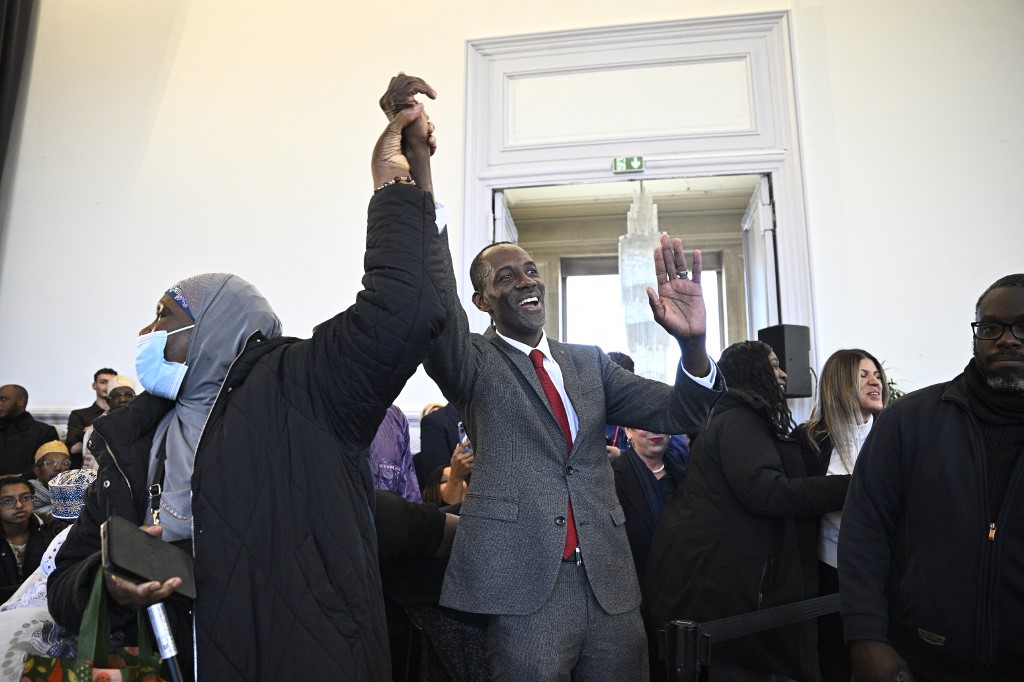
Bally Bagayoko (Photo: JULIEN DE ROSA / AFP)
„A Gift” to Criminals?
A police source told the media that officers feel they are being sent into the field „with a pen and a whistle.” Police unions have labelled the move as „the finest gift to criminals,” urging officers to „flee from municipalities controlled by the LFI.”
The debate intensified when Bagayoko stated that civil servants are „first and foremost people who respond to political directives.” He added that those who „do not align with the political project” will „naturally leave” through normal turnover, although he emphasised that this does not mean they will be dismissed.
His comments were interpreted as a veiled threat to purge or sideline staff opposing his agenda. David Amiel, the French Minister for Administrative and Accounting Affairs, sent a direct letter to Bagayoko, reminding him that „no municipal authority can legally suggest that the position, appointment, or continued employment of local government officials depends on their actual or presumed adherence to the political line of the municipal executive.”
The minister warned that any attempt to exclude officials for political reasons would be „illegal” and could be suspended or annulled by administrative courts. Government sources indicated that such actions could potentially be classified as moral harassment or even criminal discrimination. The developments have drawn sharp criticism from across the political spectrum.
Eric Ciotti, the newly elected mayor of Nice, publicly offered to welcome Saint-Denis police officers into his municipal force, stating that „the Nice police need reinforcements.” Other right-wing figures accused the LFI of prioritising ideology over public safety in an area long plagued by serious crime and urban violence.
Some voices from the left also expressed unease over the speed and symbolism of the policy changes. Bagayoko sought to reassure residents and police officers, emphasising that Saint-Denis will maintain its „strong, community-based municipal police” and that any changes will be implemented in consultation with staff and residents. He framed the initiative as part of a broader „new dynamic,” hoping it will serve as a national testing ground for LFI policies.
The LFI’s approach in places like Saint-Denis is no coincidence. It is a direct result of a deliberate electoral strategy, focusing the party’s efforts on France’s most immigrant-populated suburbs, where individuals of North and Sub-Saharan African descent, often with Muslim backgrounds, increasingly constitute a significant portion of the electorate.
In Seine-Saint-Denis, the LFI has built a solid base by emphasising social justice, anti-discrimination rhetoric, and criticism of „systemic racism”—particularly within the police force. LFI spokespersons regularly frame urban violence and clashes with police as outcomes of poverty, exclusion, and institutional racism, rather than individual criminality.
By positioning itself as a defender of suburban youth against „racist” police actions and advocating for issues like the Palestinian cause, the LFI has solidified its support in high-immigration areas where traditional socialist and communist votes have collapsed.