

Poland Plans a Half-Million Strong Army
Under a long-term defense program, Poland aims to build an armed force of 500,000 personnel by 2039, including over 200,000 reservists. The Polish Defense Minister claims that this initiative will establish a sustainable military capacity. The country no longer considers a large-scale conflict to be merely hypothetical; instead, the leadership views it as a fundamental assumption that will shape the structure, training, and investments of the armed forces.
Władysław Kosiniak-Kamysz, the Polish Minister of Defence, announced that the new reserve force will operate on a voluntary basis, with applicants receiving regular training. Both men and women are encouraged to apply, and a rapid mobilisation system is being planned for the expanded army, according to Brussels Signal.
Kosiniak-Kamysz, who also serves as Deputy Prime Minister in the centre-left Polish government led by Donald Tusk, stated that „high-readiness reservists” will join professional soldiers.
„Poland is facing demographic challenges that are expected to reduce the number of potential recruits in the coming years,” Kosiniak-Kamysz said at a press conference yesterday.
From 2026, Poland will begin forming a high-readiness reserve – a unit of reservists who will undergo regular training and be able to quickly join the country’s defense.
This was announced by the Deputy Prime Minister and Minister of National Defense of Poland Władysław… pic.twitter.com/f3sfYwyHC7
— SPRAVDI — Stratcom Centre (@StratcomCentre) February 10, 2026
Demographics pose a significant constraint. Poland’s population of 38 million is aging, and maintaining a military force of half a million in the long term will exert pressure on the labor market, public finances, and social cohesion.
According to Chief of Staff Wiesław Kukuła, reservists have the flexibility to choose when and with which unit they serve, but they must participate in at least eight days of training each year.
This announcement coincided with the launch of this year’s civil „Readiness” training program, which begins on March 7. The pilot program initiated last autumn attracted over 16,000 participants.
Poland is a serious player in Europe now with the 3rd biggest and most modern army in NATO, and this is only the beginning 🇵🇱👊
Polish General Blazeusz: “We have plans in place if the US doesn’t show up.” pic.twitter.com/2eOUqcfA70
— Mario (@PawlowskiMario) February 8, 2026
Poland plans to build a massive military force of 300,000 personnel and 200,000 reservists by 2039, thereby establishing sustainable wartime capacity. A large-scale conflict is no longer considered hypothetical but a fundamental assumption guiding the structure, training, and investments of the army.
This shift is directly based on experiences gained in Ukraine and signals a rethinking of NATO’s eastern defense, where national mobilization and resilience are increasingly emphasized alongside the alliance’s guarantees. The belief that war would be short, limited, and primarily fought by professional soldiers has been undermined by events in Ukraine.
Poland’s efforts combine three elements: an increase in personnel, widespread or nearly universal military training, and the rapid integration of advanced strike capabilities, drones, and systems equipped with artificial intelligence.
Poland is already allocating 4.8 percent of its GDP to defense, the highest ratio within NATO.
The sustainability of these expenditure levels is questionable, especially as Poland’s budget deficit is growing faster than in other EU states, and the country is subject to the EU’s excessive deficit procedure.
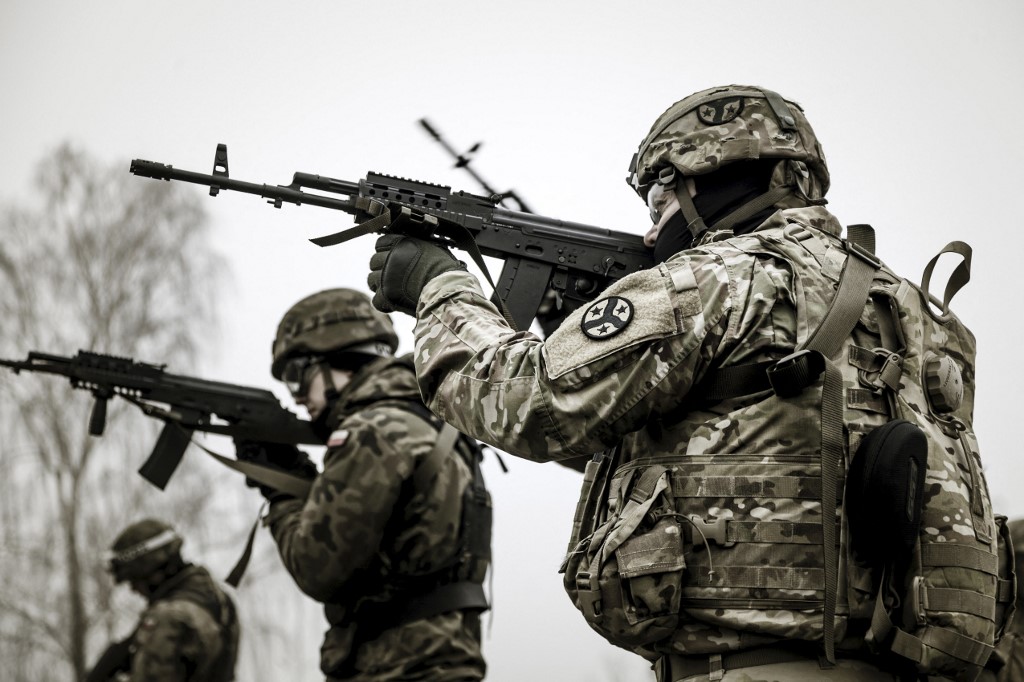
Our cover image is for illustration purposes only. Photo: AFP