

Spain Seeks to Permanently Integrate Undocumented Migrants
The progressive Spanish government plans to legalize the residency status of several hundred thousand undocumented migrants.
Spain’s Minister of Migration, Elma Saiz, stated in an interview with RTVE that the government is expected to approve the relevant regulation soon. According to the Funcas analytical center, approximately 840,000 undocumented migrants were living in Spain at the beginning of January 2025, the majority of whom are from Latin America.
“Estimates suggest that we are likely talking about around half a million people,” the minister remarked.
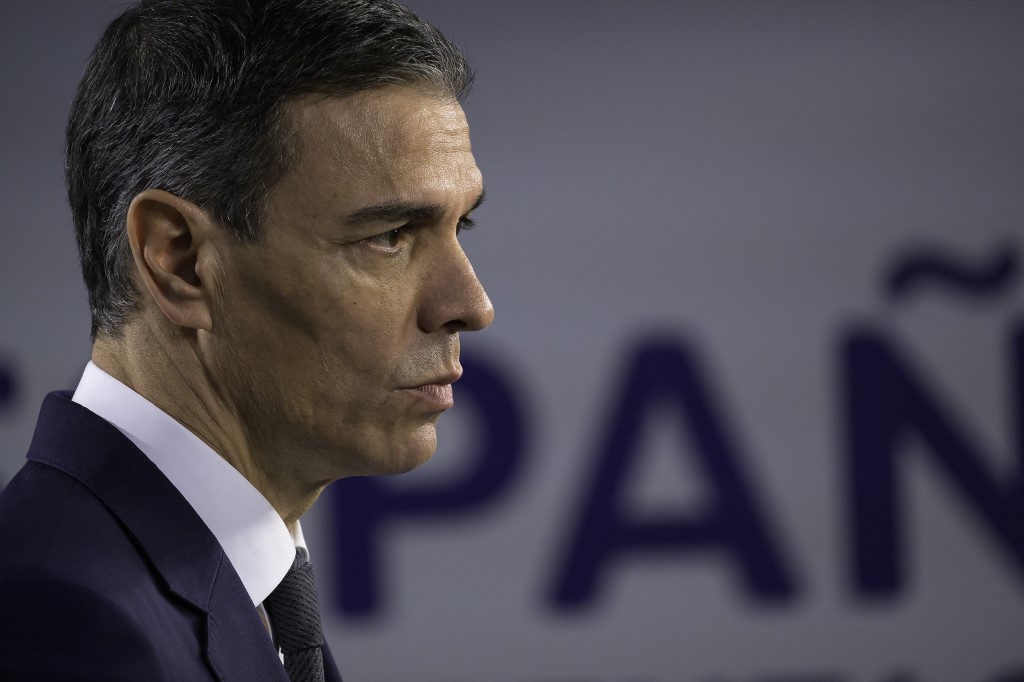
The socialist government led by Pedro Sánchez is thereby acknowledging and valuing those individuals who are already residing in Spain, Saiz emphasized.
Elma Saiz, the minister responsible for integration, social security, and migration, described the measure as “historically significant,” marking the imminent commencement of the popular legislative initiative (ILP) aimed at legalizing foreigners. In her interview on the program La Hora de La 1, Saiz underscored that the goal is to “recognize, dignify, and provide guarantees” for those who already live and work in Spain, ensuring that the process will also benefit minors under the care of families.
The government intends for the regulation to be ready by early April to initiate procedures, with the goal of concluding most of the process by June 30.
„Every day counts, so it is crucial that this is implemented as soon as possible,” he emphasized, recalling that the reform of this immigration regulation has „remained on the shelf.”
According to information from ministry sources, the regulation will affect those who have been living in Spain for at least five months and have applied for international protection before December 31, 2025. Consequently, the legalization will also extend to the children of applicants who are already residing in Spain. Sánchez justifies the migration-friendly policy by highlighting the threats to the welfare state and pension security, which arise from labor shortages and an aging population, as reported by Exxpress.
Pedro Sánchez, the socialist Prime Minister, stated that Spain needs immigration to fill labor gaps and counteract the aging demographic. He noted that migration has accounted for 80% of Spain’s dynamic economic growth over the past six years.
The Spanish Catholic Church was among those who praised the move, calling it an „act of social justice and recognition.”
However, the opposition has vehemently criticized the government, claiming that the regulation will encourage illegal immigration. Alberto Núñez Feijóo, leader of the main right-wing opposition group, the People’s Party, wrote on X that the „ridiculous” plan „overburdens our public services.”
„In socialist Spain, illegal activities are rewarded,” he said, adding that if he comes to power, he would „completely overhaul” immigration policy.
According to official data released today, in the last quarter of last year, out of the 76,200 people recorded in employment statistics, 52,500 were foreign nationals, contributing to the lowest unemployment rate since 2008.
Hasta 46 muertos. Cientos de heridos. Ninguna dimisión.
Y la primera respuesta de Sánchez es una regularización masiva para desviar la atención, aumentar el efecto llamada y desbordar nuestros servicios públicos.
En la España socialista, la ilegalidad se premia.
La política…
— Alberto Núñez Feijóo (@NunezFeijoo) January 26, 2026
Spain has been a gateway for immigration in Europe for decades
Spain is one of Europe’s main entry points for undocumented migrants. Tens of thousands arrive primarily on the Canary Islands, located off the northwestern coast of Africa. According to the latest data from the Spanish National Statistics Institute, more than seven million foreigners reside in Spain, out of a total population of 49.4 million.
Since the 1980s, Spain has implemented six significant regulatory processes for immigrants, initiated alternately by the PSOE (Spanish Socialist Workers’ Party) and the PP (People’s Party) governments. These measures were first introduced by Felipe González in 1985 and 1991, benefiting over 147,000 individuals. Their main objectives were to combat the informal economy and ensure the fundamental rights of foreign nationals in irregular situations.
During José María Aznar’s administration, several important mechanisms were introduced, including the 2001 „settlement-based regularisation,” which enabled over 239,000 individuals to obtain documentation.
However, the largest-scale process to date occurred in 2005 under José Luis Rodríguez Zapatero’s presidency, affecting nearly 578,000 foreigners. This milestone represented a paradigm shift, as it directly linked the acquisition of legal status to the labor market, for the first time requiring the signing of a work contract.
The current process aims to align with a technically consensual approach that has been striving for decades to accommodate the growing migrant population, ensuring their social and economic integration, as highlighted by Spanish broadcaster RTVE.