

Thousands Could Apply for Naturalisation, Warns FPÖ
A decade after the 2015 migrant crisis, the deadline for submitting applications for Austrian citizenship has passed. The Freedom Party of Austria (FPÖ) has issued a warning about a potential wave of naturalisations. While it is not yet a "mass" influx, Syrians are now leading the statistics in Austria for the first time. In 2025, nearly one-fifth of Austrian naturalisations were granted to Syrians, but the peak has not yet been reached.
In 2015, the year of the refugee crisis, a record 88,340 applications for asylum were submitted. That same year, 14,413 individuals were granted asylum. The ten-year threshold will be reached in 2026. Anyone who has been legally residing in the country since then can, in principle, apply for citizenship—provided they meet income, German language proficiency, and security clearance requirements.

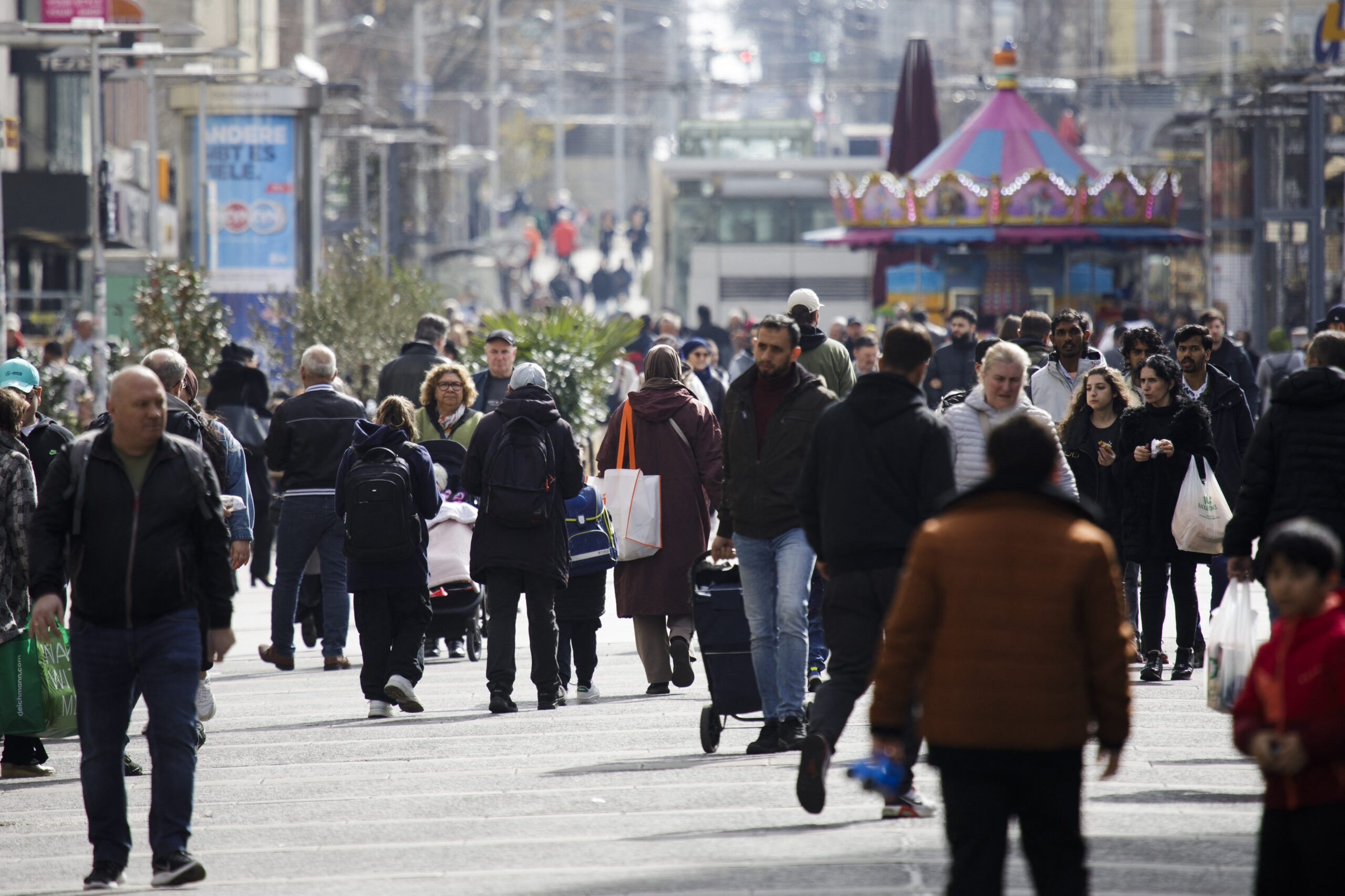
The FPÖ warns that thousands could seek naturalisation (Photo: AFP).
An overview of the statistics shows a noticeable shift in the composition of naturalisations. In 2013, only 83 Syrians were granted citizenship in Austria. This number was 79 in 2015. Then came a turning point:
– 2021: 543 individuals;
– 2022: 1,165 individuals;
– 2023: 1,866 individuals;
– 2024: 2,241 individuals.
Within eleven years, the number has increased more than twenty-fold. Since 2021, it has quadrupled, according to the Austrian newspaper Exxpress.
From January to September 2025, 2,080 Syrians acquired Austrian citizenship. This accounts for 19.1 percent of all domestic naturalisations—currently, nearly one-fifth of new citizens are of Syrian descent. Syrians thus form the largest independent group among new citizens in Austria.
The Austrian Statistics Office will publish the final aggregated data for 2025 next Wednesday.
FPÖ: From 15 Years to Total Blockade
A year ago, the FPÖ had already warned of the naturalisation of „thousands of people” as a consequence of the events of 2015. In February 2025, Herbert Kickl, the leader of the FPÖ, demanded that the waiting period be extended from 10 to 15 years. As he argued, asylum is „temporary protection” and should not automatically convert into citizenship merely with the passage of time.
A year later, the party went even further. In 2026, they demanded in the National Council that asylum seekers be categorically denied access to citizenship, regardless of the length of stay, integration efforts, or fulfilment of criteria.
The coalition’s response was that there is no automatic process; instead, there is a strict case-by-case assessment and one of the most stringent citizenship laws in Europe.
The ten-year threshold does not only apply to those from 2015. In 2016, there were 22,307 positive asylum decisions—of which 15,528 were granted to Syrian nationals. A further 21,767 decisions followed in 2017, including 11,827 Syrians and 4,274 Afghans. These groups will only reach the ten-year threshold in 2027 and 2028.
Whether this will result in a noticeable increase in the number of naturalisations depends on income, integration, and the assessment of individual cases—that is, the criteria that must be met to obtain citizenship. Nevertheless, Syria clearly leads in terms of naturalisations. It is followed by Turkey, Afghanistan, Bosnia and Herzegovina, and Iran. Together, these five countries accounted for nearly half of domestic naturalisations by September 2025. The long-term trend is equally noteworthy. In 2006, 25,746 people were granted citizenship, followed by a steep decline, with the number dropping to 6,135 in 2010. Since then, the figure has been almost continuously rising. Between 2019 and 2024, the number of naturalisations increased from 10,500 to 13,036—marking the highest level since 2008. Since 2010, the number of domestic naturalisations has more than doubled.