

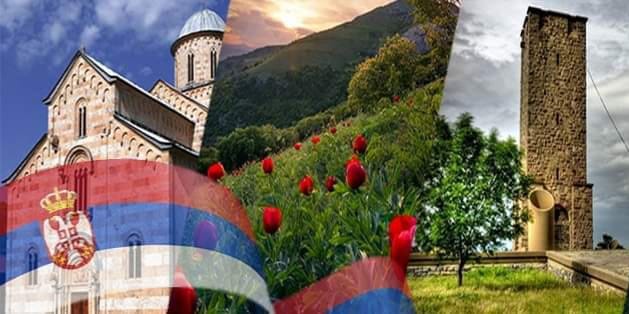
Attacks against Kosovo's Serb cemeteries and churches intensify
Kosovo has seen a rise in the number of criminal incidents against religious and cultural heritage sites in recent years. A report prepared by the Organisation for Security and Co-operation in Europe (OSCE) reveals that most of the crimes were not motivated by financial gains, and that Serb graveyards and church buildings were their primary targets. The persecution of Christians is taking on significant proportions across Europe.
Overwhelming majority of attacks target Serb religious sites
The OSCE report found that 247 incidents were committed at religious and cultural heritage sites in Kosovo between January 2014 and December 2020. Out of that, 112 incidents – mainly thefts and burglaries – were motivated by financial gains. Money played no role in the remaining 135 cases. 57 per cent of these non-financial crimes were committed in churches and cemeteries belonging to the Serbian Orthodox Church, while 24 per cent were directed against religious properties of the Islamic Community. In 12 cases (10 per cent), the attacks targeted Catholic churches, whereas secular sites were targeted in only 6 cases. Jewish sites were affected in three incidents, and a Protestant church was also targeted once.
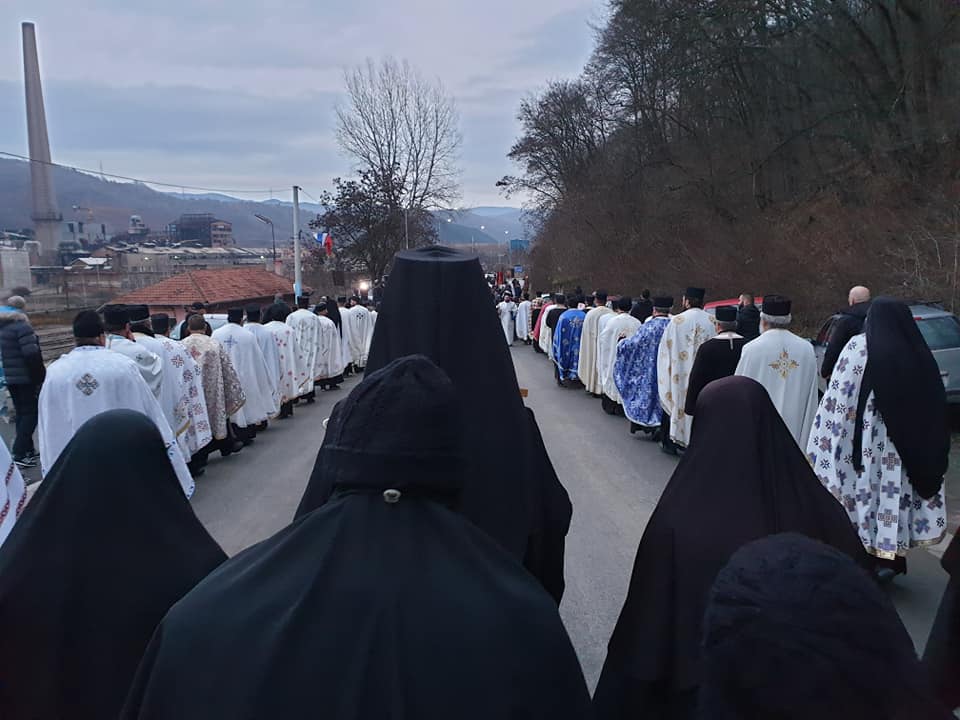
Photo: Facebook
Looking at burglaries committed for financial gains, we see a different picture, because most of these – more than half of all crimes – happen against mosques. Somewhat less, 38 per cent of all robberies, happen at Serb churches, and only 4 per cent are directed at institutions of the Roman Catholic Church.
Perpetrators usually escape punishment
The report also points out that in most cases the perpetrators go unidentified, and there are no effective means of deterring them.
„As the identity of most perpetrators is kept in secret, their intentions and motives are unclear. The only time we have a clear-cut motivation is when money, or some valuables disappear. Kosovo’s law prescribes that perpetrators of crimes against cultural property be punished, but the lengthy trials and acquittals do not act as a deterrent to potential criminals,” the international organisation says in its report.
This is confirmed by the fact that out of 247 cases since 2014, perpetrators have only been convicted by the Kosovo authorities on 18 occasions. The OSCE’s head of mission expressed hope that the report will help institutions to preserve local cultural heritage better and more effectively. The effective protection of cultural heritage should be a priority for all national communities, Michael Davenport added.
Serbs are also responsible for the situation, Pristina says
According to Kosovo’s deputy prime minister, Prime Minister Albin Kurti will meet with representatives of local Serbs in September to find a solution to their problems. According to Emilija Rexhepi, the Serbs are, willingly or unwillingly, responsible for the situation. Serbian Interior Minister Aleksandar Vulin has also commented on the escalating conflict, saying Serbia will never again allow its own nation to be hurt. The Serbian army is the best prepared in the region, he stressed. He he does not want war, he said, adding that he has called on the Albanians not to chase away Serbian children from the northern part of Kosovo.
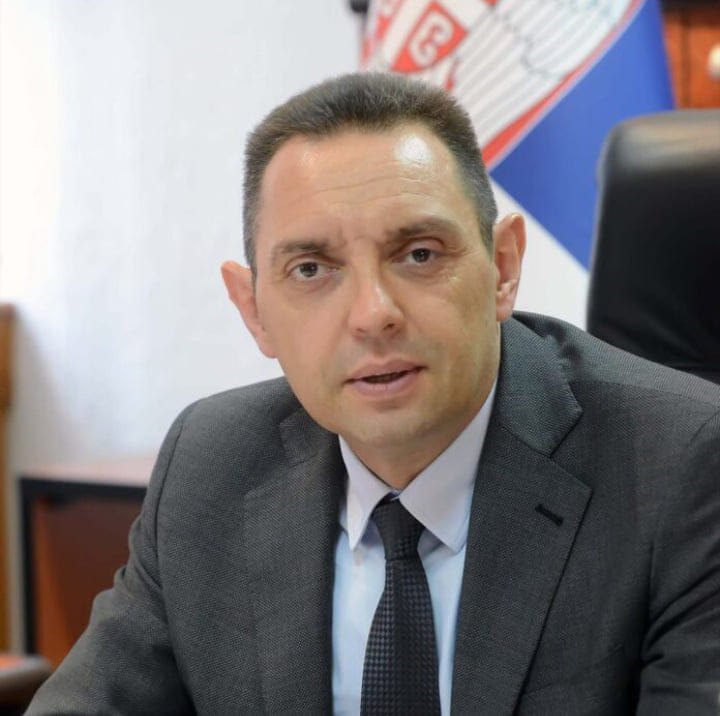
Photo: Facebook
However, attacks targeting the Church are not only experienced in Kosovo, but all over Europe. According to an analysis released by the New York-based Gatestone Institute, 2019 saw a record 3,000 such attacks in Europe, most of them in France and Germany.