

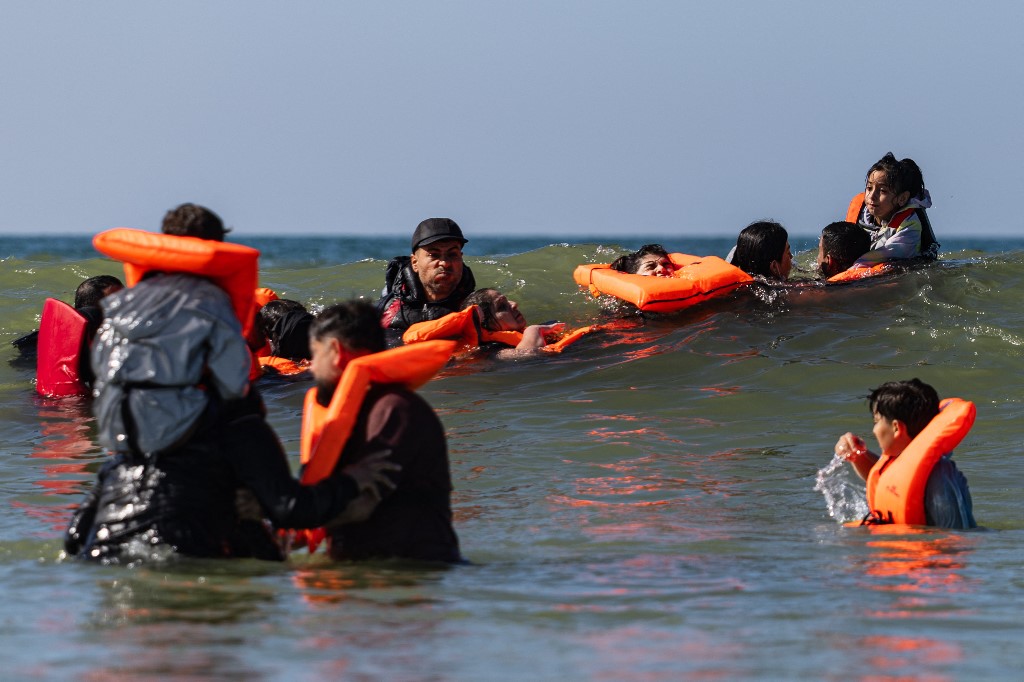
UK–France migration experiment quietly ends: barely four per cent of small-boat arrivals were sent back
The UK Home Office has announced the end of its “one in, one out” returns deal with France. In a year, just over a thousand people were sent back, while almost 28,000 arrived across the Channel in small boats. On the same day, Paris openly sided with Madrid over the Ceuta crisis.
The scheme, known as Operation Hillmore, was launched in August 2025 amid high expectations. Under it, Britain could return to France people who had arrived by small boat and had no right to remain. In exchange, it accepted the same number of asylum seekers from France through a legal route. The Home Office said on Wednesday that the pilot was “no longer processing new cases.” The agreement formally expired on 1 October.
The numbers speak for themselves
Between 4 August 2025 and 30 June 2026:
- 1,087 people were returned to France,
- 1,117 people were transferred from France to the UK,
- 27,920 migrants arrived by small boat.
In other words, only about 4 per cent of small-boat arrivals were sent back. The scheme was also expensive. Home Secretary Shabana Mahmood told MPs on 15 September that each return cost on average around £56,000 (about €65,500). Since the Channel became one of the main migration routes, around 197,000 people have crossed it in small boats.
Everyone blames someone else
Andy Burnham, who succeeded Keir Starmer as prime minister in July, blames Brexit, saying it has made stopping the boats harder. On the same day he also suggested that rejoining the EU could be on the table. French Interior Minister Laurent Nuñez wants a more European approach. In his view, France cannot carry sole responsibility for a border that is in effect the EU’s external border.
Meanwhile the smugglers are adapting faster than the politicians. Research shows a sharp rise this year in the number of boats leaving from the Belgian coast. The route is simply shifting to wherever controls are weaker.
Macron: Spain is “the victim of a multiple attack”
Migration was also a main topic at that day’s French–Spanish summit. Emmanuel Macron stood by Madrid over the Ceuta crisis, saying Spain was “the victim of a multiple attack.” According to Euronews, he implicitly criticised European countries, including Italy, that had not shown solidarity with Spain. Macron called for a balance between solidarity and responsibility under the EU Migration Pact, with “robust solutions.”
Pedro Sánchez thanked France for its support during the “difficult days” of the crisis. He admitted that no one had expected such numbers on 30–31 July.
Torture allegations in Ceuta
At the same time, the Spanish government is having to answer for its own soldiers. Between 10 and 15 September, Amnesty International interviewed more than 65 people in Ceuta and gathered 22 accounts accusing Spanish soldiers of beatings, humiliation and irregular expulsions without any procedure. The Ministry of Defence has referred the matter to prosecutors. The article also notes that more than 30 migrants have been arrested for assaulting soldiers.
In the city, 2,383 unaccompanied minors have been identified. Reports say 500 to 700 of them are living on the streets, and around 800 women are also homeless. These figures show that the Ceuta crisis is still not over two months after it began.