

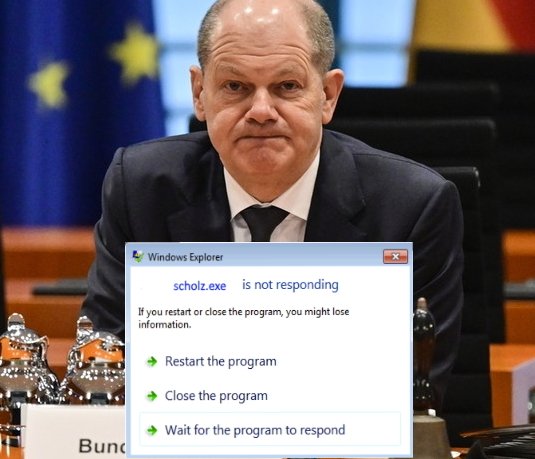
Merz: Germany is becoming increasingly isolated
The leader of the Christian Democratic Union (CDU) party, Friedrich Merz, sees serious failings in German politics regarding the conflict in Ukraine. He sharply criticised the chancellor, saying that Olaf Scholz has been evasive and silent on the issue. Meanwhile, another opposition party criticised the government for trying to cover up its own failure with the war in Ukraine.
CDU leader Friedrich Merz has called on the government to review Germany’s foreign and security policy, saying that „in retrospect, we have to conclude that all the defence ministers of the past 20 years have made bad decisions regarding the equipment and condition of troops,” Mr Merz told Bild am Sonntag, adding that there were also some „serious failures” within the CDU/CSU. From the end of 2005 until late 2021, the CDU and the Christian Social Union (CSU) were in charge of the defence ministry. Prior to that, the post was held by Peter Struck, a Social Democrat (SPD) politician, from mid-2002.
„The past 20 years of Germany’s foreign and security policy is in complete ruins. When this war is over, we will have to analyse carefully how we got here,”
Mr Merz assessed the situation, sharply criticising Chancellor Olaf Scholz in a debate on arms transfers to Ukraine. He believes the SPD politician is constantly obfuscating and deflecting when he speaks on the issue, and that he is only telling half-truths.
In the interview, Mr Merz also hinted that his party could block the 100-billion-euro special fund earmarked for the German army, the Bundeswehr, if necessary. „If the chancellor wants to win us over to change the constitution and take on 100 billion euros in new debt, he has to talk to us,” the CDU leader said. Mr Merz hinted that the adoption of the special fund would require an amendment to the constitution, which would necessitate a two-thirds support in parliament, making it impossible to bypass the CDU/CSU alliance. The two parties, however, have yet to decide whether to vote in favour of the proposal, because they suspect that the government of the Social Democrats, Greens and Liberals does not want to spend the money exclusively on the Bundeswehr.
They noticed that the proposal would delete any reference to the „armed forces” from the Constitution’s relevant articles, giving the government an opportunity to spend part of the 100 billion on other measures that are only nominally related to security, including the much-debated energy policy, which has proved to be a failure so far. Mr Merz demanded from Chancellor Scholz that the 100 billion euros should be used exclusively for the rearmament of the Bundeswehr. The government should also set the aim to spend at least two per cent of GDP on defence in the long term.
„If these conditions are met, and a repayment plan is presented for the new debt, then we can reach an agreement,”
Merz added, noting that the government’s serious failings could discredit the Chancellor both at home, in Germany, and internationally.
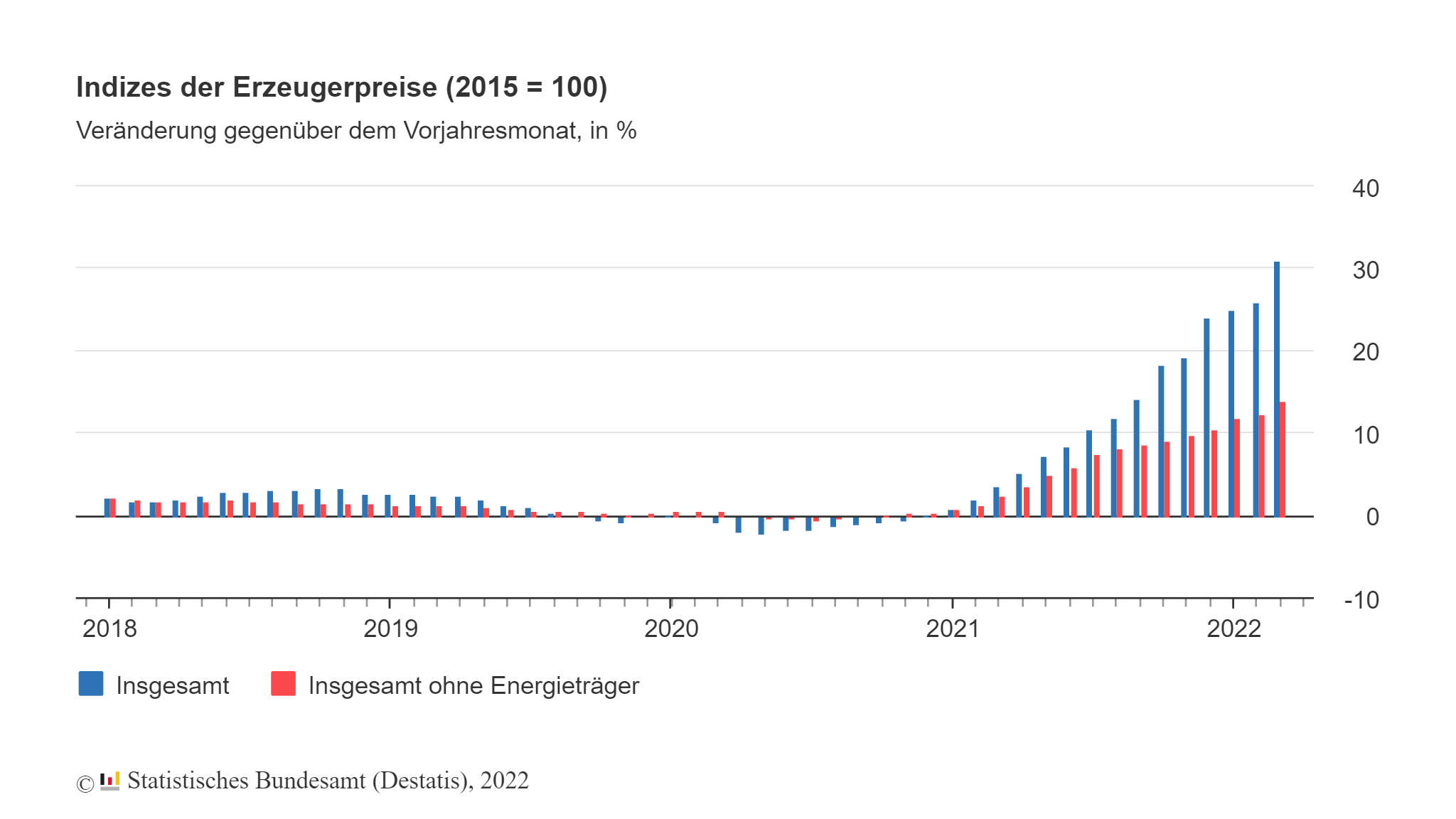
The cabinet led by Olaf Scholz has done almost nothing to tackle the rising inflation during the recent period, and has failed to help people in any meaningful way. Indeed, the complete abandonment of nuclear power has left one of Europe’s leading powers extremely vulnerable. This could put the country way behind its biggest economic rival, France, in the short term. Producer prices for commercial goods in Germany were 30.9 per cent higher in March 2022 than in March 2021, the highest increase in 73 years compared with the same month last year, according to the German Statistical Office.
Besides the CDU, the opposition Alternative for Germany (AfD) party has also sharply criticised the government for its failures and inability to act. AfD believes that Mr Scholz is using the situation in Ukraine as an excuse to cover up his own mistakes.
„Using the war in Ukraine as an explanation for high inflation is a cheap excuse and only serves to distract attention from the failure of the German government. Producer price inflation was already at 25 per cent before the outbreak of the war. The federal government, however, is not only responsible for the inflation crisis, it is also completely powerless to tackle the social consequences of inflation. Millions of citizens are still waiting for the relief promised by Chancellor Scholz,”
explained Rene Springer, the labour and social affairs spokesman of AfD’s parliamentary group.
#Inflation geht weiter durch die Decke – Wo bleiben die versprochenen Entlastungen, Herr Bundeskanzler? Die Erzeugerpreise waren im März 2022 um knapp 31 Prozent höher als im März 2021. #AfD-MdB @Rene_Springer fordert die Regierung zum Handeln auf!https://t.co/IzUT3DdYWM pic.twitter.com/Fk3tfzvrEK
— AfD-Fraktion im Deutschen Bundestag 🇩🇪 (@AfDimBundestag) April 20, 2022
Tags: