

Diplomatic Tensions Erupt Between Spain and Italy Over Migrant Surge in Ceuta
On Friday, Spain announced it had successfully managed to reverse a massive influx of migrants into the North African Spanish enclave of Ceuta; the majority of the tens of thousands who crossed overland and by sea have now voluntarily returned. Spain summoned the Italian ambassador to protest against remarks made by Italian Foreign Minister Antonio Tajani, who claimed that Spain's amnesty policy had "encouraged human trafficking."
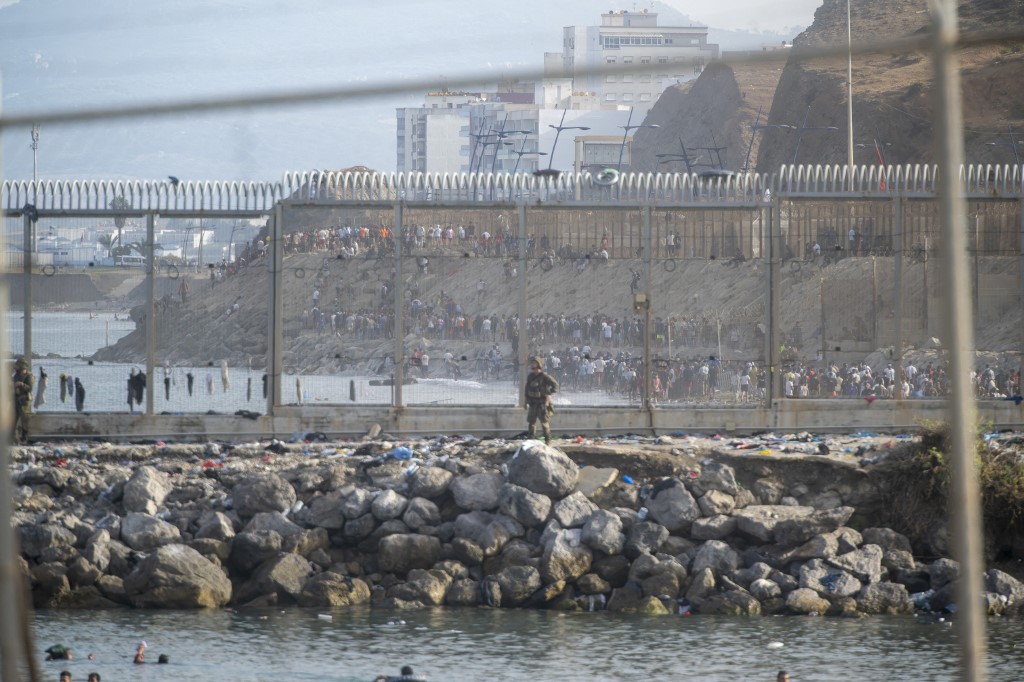
According to the Spanish government’s representative in Ceuta, 57 bodies were found on the Spanish side of the border, with the possibility of more victims on the Moroccan side. Some individuals reportedly drowned, while others were crushed as they attempted to climb onto the breakwater supporting the border fence, as reported by Reuters.
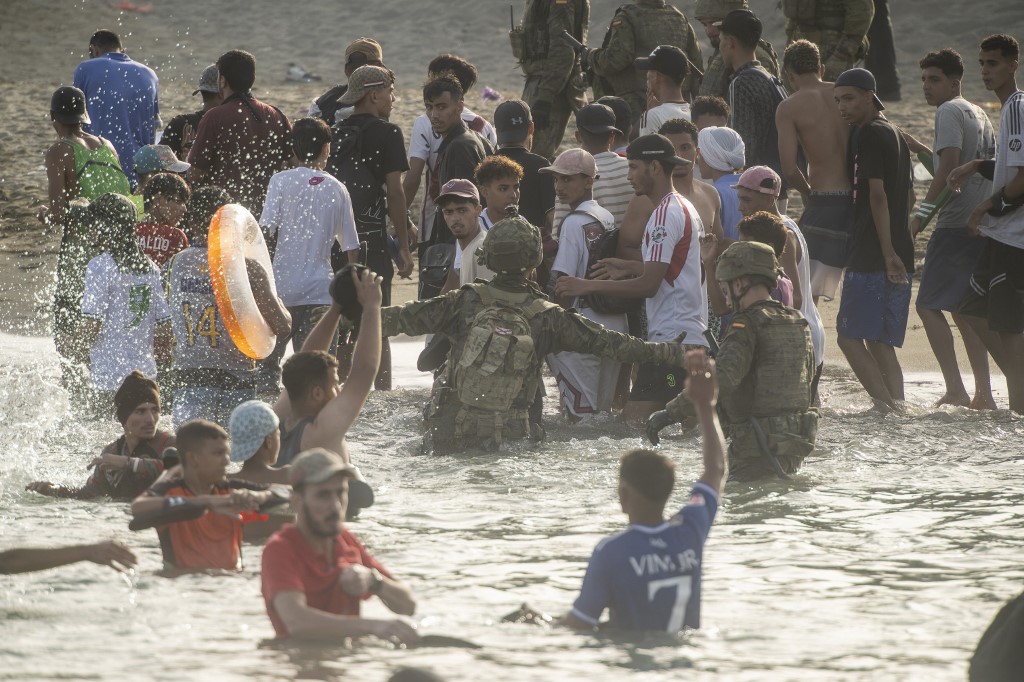
The Spanish Ministry of the Interior stated that since Thursday morning, approximately 50,000 people had crossed the border, estimating that by early Friday evening, 48,300 had returned. Juan Jesus Vivas, the head of Ceuta’s local government, indicated that as many as 60,000 people may have surged across the border in recent days.
Moroccan forces used rubber batons and tear gas to disperse crowds at the gates of Ceuta, trying to prevent more people from entering the small Spanish territory, which juts into the Mediterranean Sea from Morocco.
The chaotic scenes at the border have caused divisions across Europe, with leaders from other EU member states urging Spain to manage the situation appropriately. Italy announced it would suspend its Schengen agreements with Spain, which will affect travelers flying or sailing between the two countries. Madrid contends that this move violates EU treaties.
A Reuters correspondent reported that riot police deployed tear gas to disperse some of the crowds gathered near the fences at the enclave’s border. Water cannon-equipped trucks were also brought in, and following clashes with the crowd, the charred remains of a bus and seven cars were visible.
CEUTA Photo: AFP
On the other side, Spanish military vehicles lined parts of the border while dozens of migrants in Morocco watched from a hilltop, unable to cross. Hundreds were seen returning to Morocco through border checkpoints and gaps in the fence; some reported finding no food or shelter in Ceuta.
„Honestly, I don’t even know why I came here, and now I’m going back,” said a young Moroccan man from Tangier to Reuters. „I haven’t eaten since yesterday, even though I brought a little money with me… What we’re doing isn’t good, it’s not enjoyable.”
Ayman, a 20-year-old barber from the port city of Larache, who only provided his first name, told Reuters that he managed to cross the border after a five-hour swim on Wednesday. „There was no food in Ceuta, and the Spanish army roughly expelled us,” he said.
Italy has held Spain accountable for the situation
Spanish Prime Minister Pedro Sanchez visited Ceuta on Friday, where he was met with insults from protesters. He described the mass crossing as a „violation of Spain’s territorial sovereignty” and stated that authorities would expedite the repatriation of illegal entrants with Morocco’s full cooperation. Ceuta and Melilla, Spain’s autonomous cities located in northern Morocco, form the EU’s only land border with Africa. The number of attempts by migrants to cross the border in search of a route into Europe has fluctuated, but the scale of Thursday’s surge appeared unprecedented.
Right-wing parties across the continent attributed the incident to Spain’s relatively lax migration policies, including the amnesty granted to several hundred thousand illegal immigrants this year. Italy has criticized Spain’s migration policy, prompting Spain to summon the Italian ambassador to protest against Antonio Tajani’s earlier statements, which claimed that Spain’s amnesty policy had „encouraged human trafficking.”