

“Ceuta is in danger” – the situation in the enclave remains unresolved
18 days after the mass influx, there are still thousands of migrants in the city.
Ceuta has reached the limits of its capacity. Despair is growing in residential areas. Residents speak of chaotic conditions, whilst doctors report an extraordinary workload – even a special clean-up operation involving more than 750 people is not enough. The police and local residents are warning that things cannot go on like this.
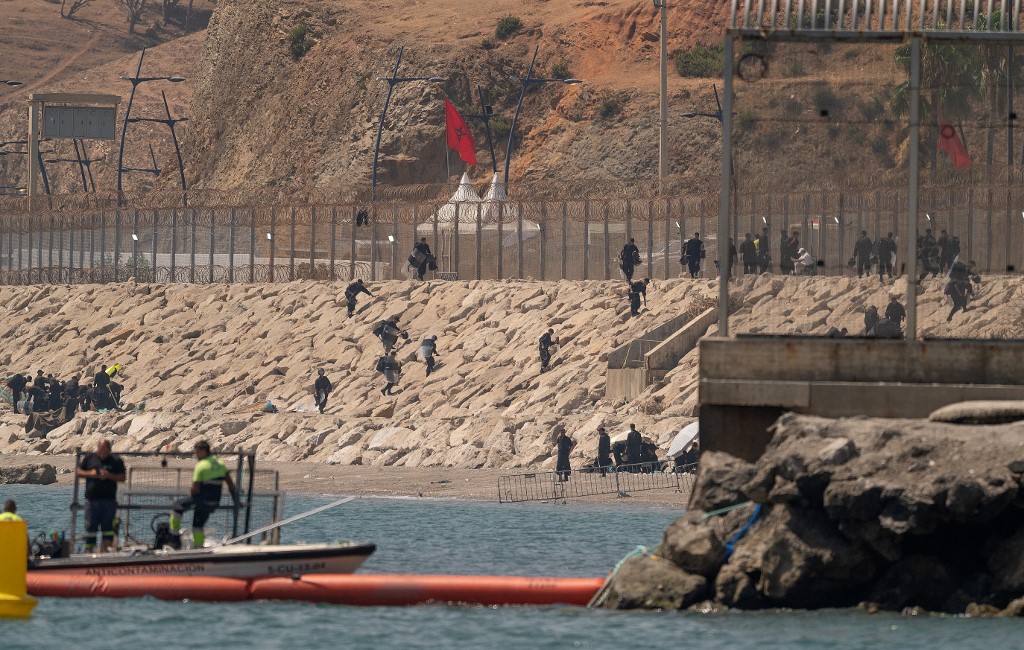
Moroccian soldiers at the border Photo: JORGE GUERRERO / AFP
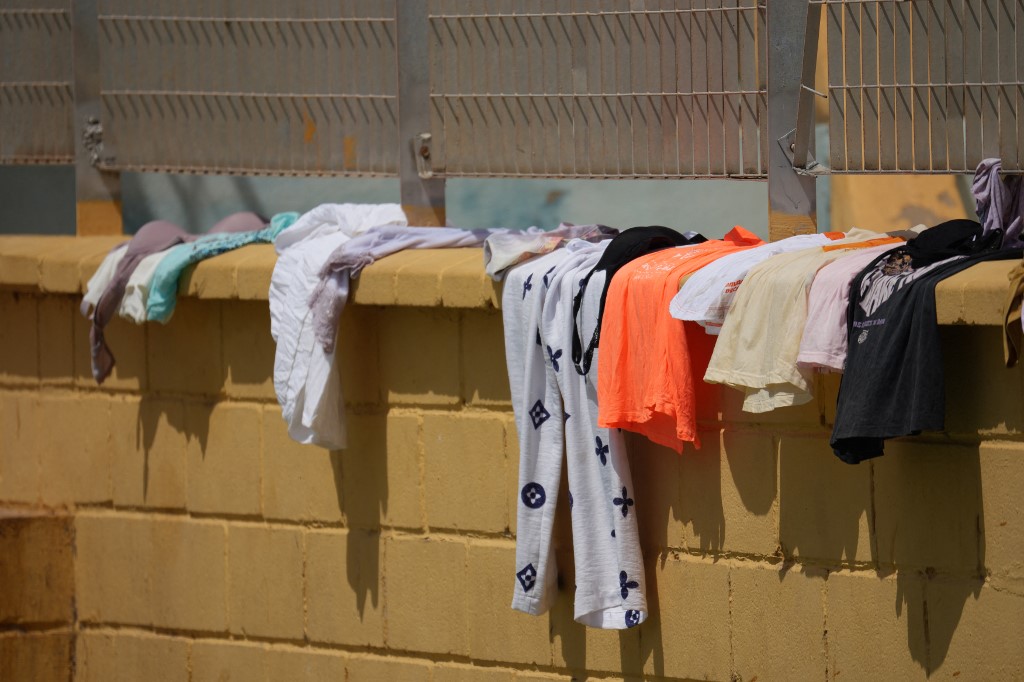
Playa del Trampolín is actually a popular beach for families in Ceuta. Today, there are nearly 100 makeshift huts there. Mattresses lie on the sand, clothes hang between the huts, and fire pits have now become an integral part of the scene. For many migrants, the beach has now become a makeshift home. Local media outlets in particular, such as El Faro de Ceuta and Ceuta Actualidad, continue to report directly from the scene, noting that, 18 days after the mass influx, there is still no sign of life returning to normal.
The government of the autonomous city has issued a warning: “Ceuta is in danger.” The population remains “shocked and in a state of constant anxiety” due to the consequences of the crisis. Following a meeting with the Spanish Minister of Health, Mónica García, the city government stated that Ceuta is “going through the most critical moment in its recent history”.
This stark warning does not come from activists or the right-wing opposition party Vox, but from Ceuta’s official government, led by Juan Vivas, the long-serving president of the conservative Partido Popular.
They do not even know exactly how many migrants remain in the territory
Uncertainty continues to reign even regarding the most basic question: how many migrants are actually still in Ceuta? Spanish Interior Minister Fernando Grande-Marlaska most recently mentioned a figure of around 5,000. Reuters currently estimates the figure to be between 5,000 and 8,000. The city council has cited significantly higher figures: between 8,000 and 11,000 people.
People are scattered across the beaches, the suburbs and other parts of the city, which has a population of around 80,000. The number of minors is particularly striking: Interior Minister Marlaska puts the figure at 1,898 identified unaccompanied minors. Social organisations and neighbourhood associations, however, estimate their number to be as high as 4,000, as many are not yet registered.
NIUS vor Ort +++ Unser Reporter @SierzputowskiMa ist in und um Ceuta unterwegs, zeigt die Zustände vor Ort. Noch immer sind Tausende Migranten vor Ort. pic.twitter.com/bM5uW3rDJk
— NIUS (@niusde_) August 16, 2026
Ceuta has a population of approximately 20,000 minors. This means that the number of officially identified unaccompanied minors alone accounts for almost ten per cent of the city’s total minor population.
Lack of water and sanitation
Whilst the CETI reception centre is completely full, problematic sites have sprung up elsewhere – not just in Trampolín. Make-shift huts have also sprung up next to the industrial halls in Tarajal. Children, mothers and other adults are sleeping there. According to the local newspaper El Faro de Ceuta, the hygiene conditions outside the halls are catastrophic. Groups of people are still staying in other parts of the city as well. Spain’s Health Minister currently describes the conditions outside official facilities as the most pressing health issue: people need water, sanitary facilities, sewage disposal and adequate accommodation.
Huts made of reeds, tarpaulin and cardboard now cover a large part of the beach.
750 people are cleaning up, but even this is not enough
Since 2 August, Ceuta has been running a special programme for cleaning, waste collection and the maintenance of public spaces. More than 750 people are working on it. The resources allocated to this have been increased by as much as 70 per cent. Despite this, the relevant authorities have reported that, given the scale of the situation, the available resources are ‘completely overwhelmed and insufficient’.
The crisis is also taking its toll economically. According to a report by Juan Manuel Doncel, the port’s president, since the beginning of August, migrants have attempted to enter the port area without authorisation on around 600 occasions. There are currently around 50 such attempts every day – and the trend is rising. During these attempts, people try, amongst other things, to stow away on passenger or cargo ships bound for the Spanish mainland. Units of the Guardia Civil are therefore maintaining a constant presence in the port.